
Written for: Dr Vanita Rattan (2025)
When it comes to skin health, a one-size-fits-all approach won’t work, especially for skin of colour. Because melanin-rich skin has distinct structural properties that heavily contrast from caucasian skin, many common skin conditions end up looking very different. This often leads to misdiagnosis or delayed treatment, even among experienced clinicians. From hyperpigmentation to eczema, understanding these unique symptoms in skin of colour is key to effective and more inclusive care. That’s why we spoke to global skin doctor and founder of skincare line, Dr. Vanita Rattan, who breaks down 7 skin conditions that are frequently overlooked in skin of colour, and what you need to know to manage them properly.
1. Post-inflammatory hyperpigmentation (PIH)
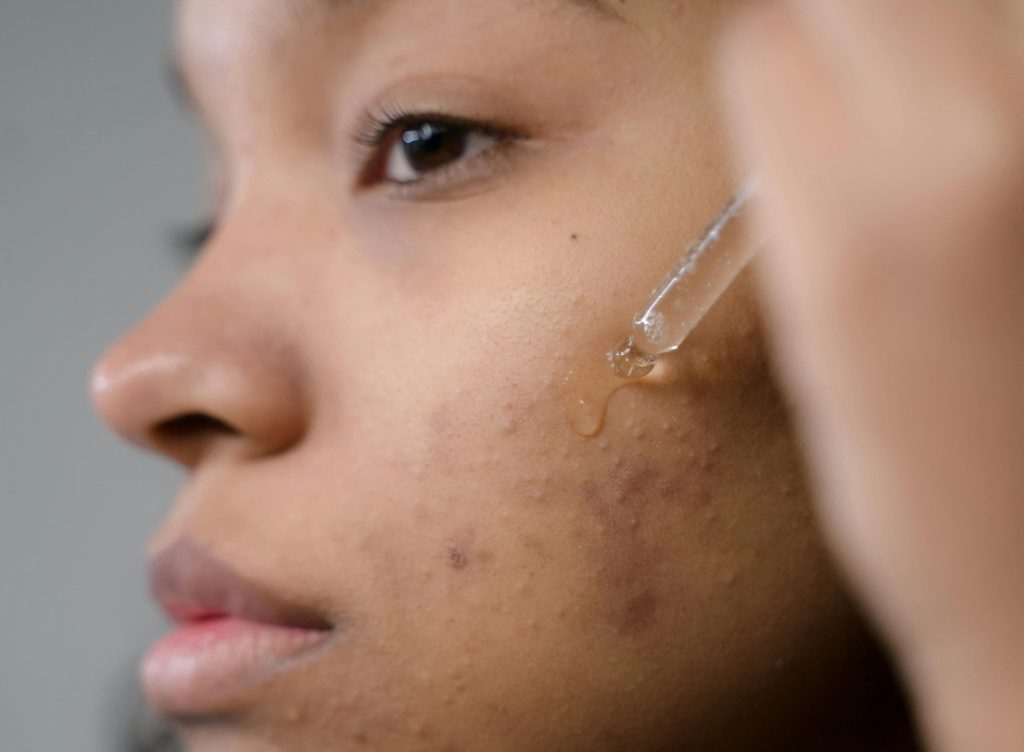
Inflammation in skin of colour often triggers excess melanin production. This is because melanocytes (melanin-producing skin cells) in darker skin are more reactive to injury, producing more pigment as part of the skin’s healing process. As a result, it leaves behind dark marks long after the initial concern has subsided. When left untreated, this can take months or even years to fade. One scratch, one bite, one burn, and skin of colour hyperpigments fast. But despite post-inflammatory hyperpigmentation (PIH) being one of the most common concerns among skin of colour, it’s frequently mistaken for permanent scarring or just naturally uneven skin tone. In reality, to fade PIH, you’ll need a complete daily range formulated with ideal active percentages for skin of colour to repair the barrier and gently reduce discolouration.
2. Keloid-prone scarring
A minor cut, a piercing, or severe acne can trigger an exaggerated healing response in skin of colour, resulting in raised, thickened scars known as ‘keloids.’ However, keloids don’t ‘heal’ in the way a typical wound does. Once they form, the excess scar tissue doesn’t naturally disappear and can remain itchy or tender long after the wound has closed. While keloids can affect anyone, individuals with more melanin are more genetically predisposed to them. As skin of colour is more sensitive than caucasian skin, managing keloids requires a careful approach. I would avoid most standard scar treatments, including lasers or dermabrasion, as they may worsen pigmentation or cause the protruding scar tissue to become harder. Instead, opt for corticosteroids or silicone dressings under the supervision of a specialist.
3. Melasma
Melasma appears as brown or grey-brown patches on the skin, often on the cheeks, forehead, and upper lip. In skin of colour, it’s commonly mistaken for general pigmentation or ‘sunspots.’ UV damage, as well as hormonal fluctuations during menstruation or pregnancy, can trigger flare-ups, making the condition highly recurrent. In fact, many cases of melasma might need a more targeted treatment with multiple tyrosinase inhibitors, like retinaldehyde and alpha-arbutin, to block the overactive melanin-producing enzymes. Without consistent sun protection, however, treatments won’t be as effective. So don’t forget your broad-spectrum SPF50 mineral sunscreen complete with anti-inflammatories like 17% zinc oxide and niacinamide.
4. Eczema with discolouration
In lighter skin, eczema is typically described as a red, irritated rash. But in skin of colour, the condition often presents as grey, purple, or dark brown patches, sometimes with less obvious redness or swelling. This contrast in appearance means eczema tends to be underdiagnosed or mistaken for simply hyperpigmentation in skin of colour. Due to this, treating eczema requires not only calming and barrier-repairing ingredients but also addressing the lingering pigment changes that can occur post-rash. This is why a fatty moisturiser is essential for eczema care as it helps prevent dryness and itchiness, as well as lowers the risk of flare-ups through proper hydration. So, make sure to look for moisturiser with ceramides and peptides to support the cell regeneration process, and humectants like glycerin to replenish the lost moisture.
5. Seborrheic dermatitis on the scalp
Seborrheic dermatitis is an inflammatory condition that affects areas of the skin that overproduce oils, especially the scalp. In skin of color, it can present as flaking and visible scaling, which is why it’s often mistaken for dandruff. However, while dandruff is a shedding of dead skin cells, seborrheic dermatitis involves redness and sensitivity, which can lead to itching, stinging, and sometimes even temporary hair loss if left untreated. While anti-dandruff shampoos can help reduce flaking, the main goal is to control the underlying inflammation. This may require medicated antifungal treatments and adjustments in hair care routines. You can start by incorporating a lightweight anagen boost hair tonic, which protects the scalp and helps maintain a healthy environment for hair growth, especially in already thinning areas.
6. Pseudofolliculitis barbae (shaving bumps)
‘Pseudofolliculitis barbae,’ or shaving bumps, are commonly seen in men with coarse curly hair, and increasingly in women who shave or wax. This occurs when strands curl back or grow sideways into the skin instead of outward, causing raised, tender skin that can sometimes lead to persistent dark spots. While it’s often dismissed as a minor grooming issue, shaving bumps can actually cause long-term scarring and ongoing pigmentation changes if not correctly managed. Preventing this condition can involve changing shaving techniques or switching to hair removal methods that minimise follicle irritation such as depilatory creams. However, you can also use a gentle chemical exfoliator with 5% mandelic acid and 5% lactic acid to unclog pores and reduce ingrown hairs without sensitivity, preventing further shaving bumps in the process.
7. Vitiligo
Vitiligo triggers the loss of skin pigment and manifests as sharply defined lighter patches of skin. In its early stages, it can be subtle, sometimes only appearing as small spots that are slightly paler than your natural complexion. These early changes in skin of colour may be mistaken for minor sun damage, chemical lightening, or post-inflammatory hypopigmentation, wherein pigment temporarily fades after skin injury. However, vitiligo is an autoimmune condition, and without early intervention, it can progress to more noticeable patches that cover larger areas of the body. While there is no cure, treatments such as topical corticosteroids, light therapy, or specialised cosmetic products like a ceramide-rich concealer with occlusives can help camouflage and protect smaller depigmented areas prone to sensitivity and dryness.
 Copywriting Candy
Leave a comment